Robert Wiene’s The
Cabinet of Dr. Caligari (1920) is a silent horror expressionist film which tells the story from Francis’s
perspective of the mysterious Dr Caligari who comes to a German fair, and soon
after murders begin to occur, to which Francis swears he will solve these
crimes. Once the supposed truth of Caligari has been revealed and the reality
shifts back to the current time, it is actually revealed that the entire story
has been told by the disturbed Francis who resides in an asylum. The setting in
the first scene is nothing out of the ordinary, being outside in a garden in
the real world, but as Francis begins to explain his recollection of supposed events,
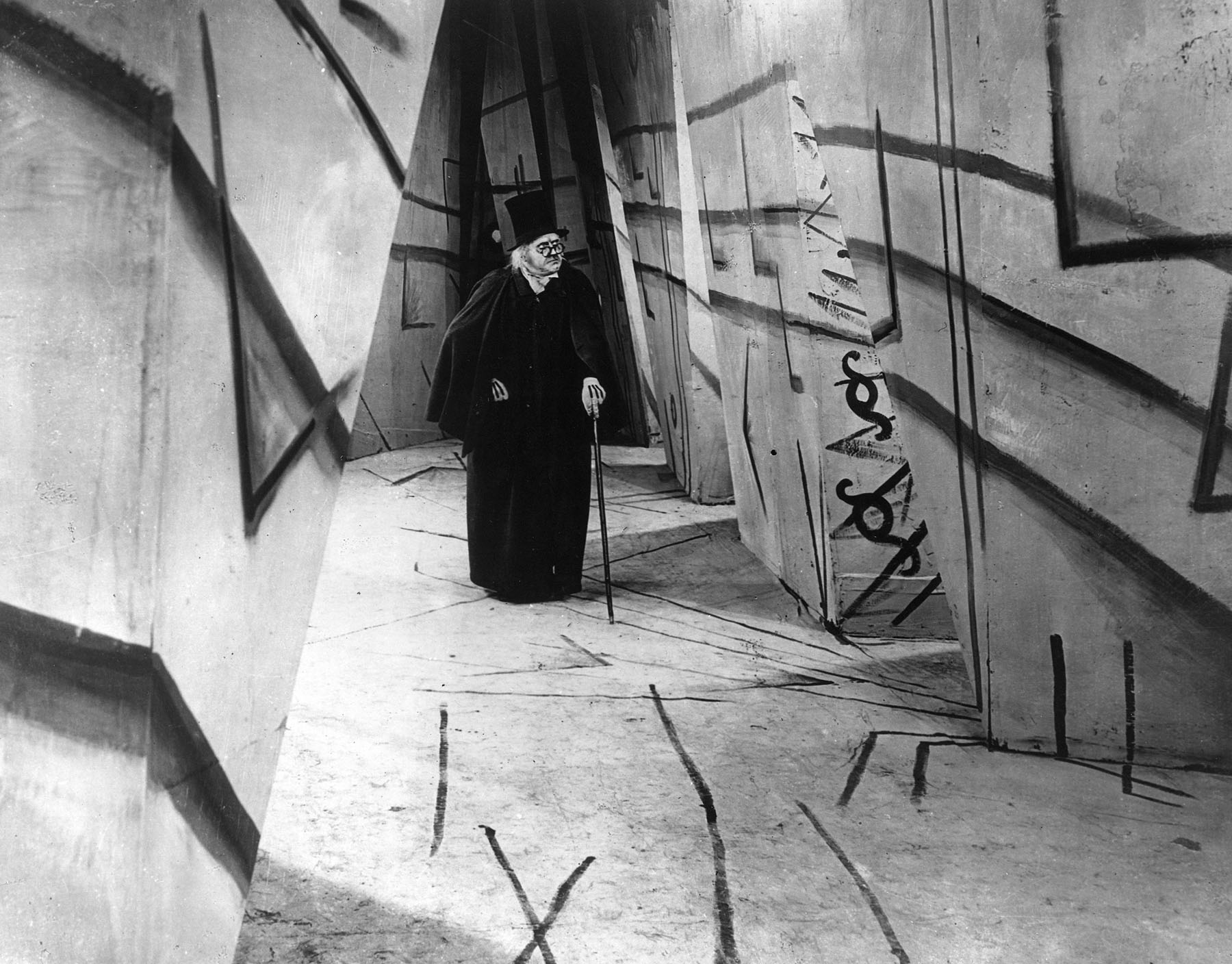
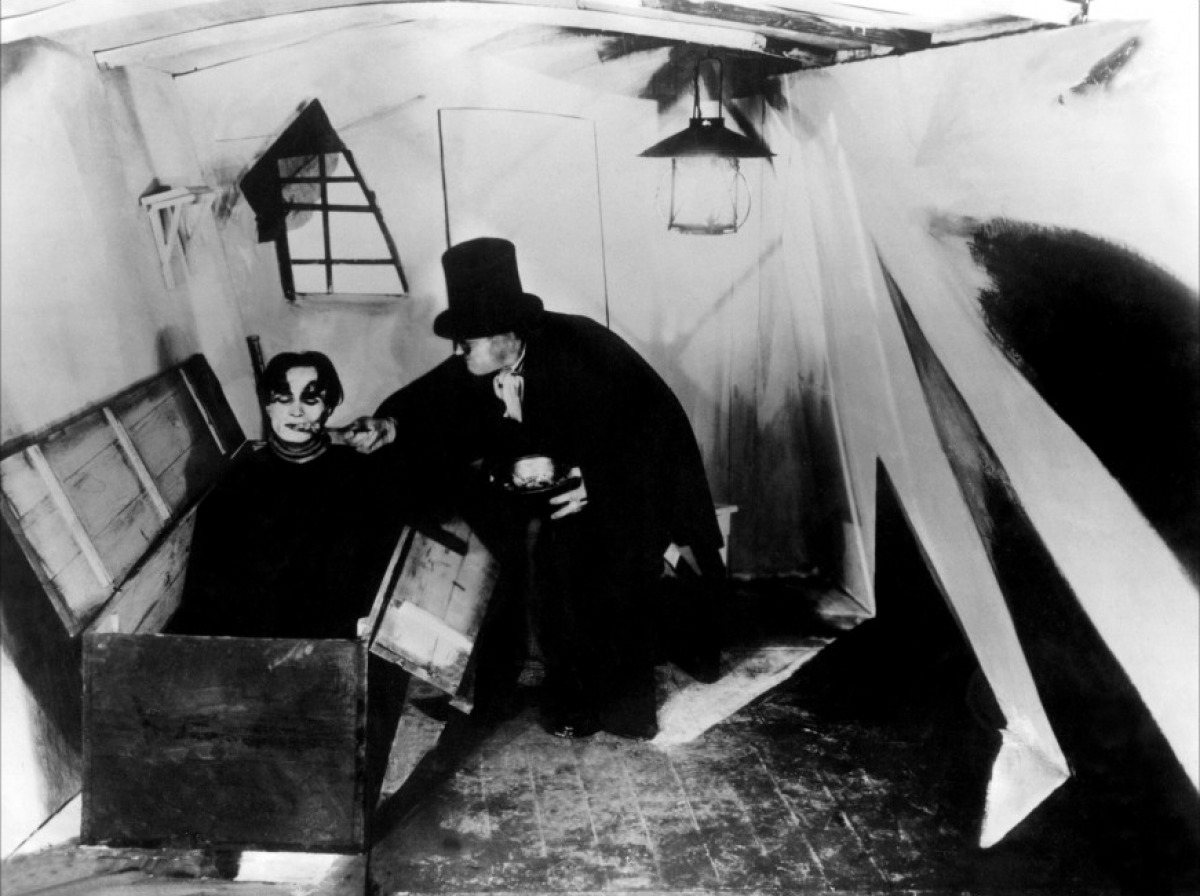
the world is drastically striking. Wiene creates a very distorted and warped world
where each structure is on an angle, such as the crooked buildings with windows
that tilt in opposite direction, street lamps that lean dangerously off the
wall, and hastily twirling carousals that appear to be balancing precariously
on an angle. This distorted setting portrays the chaotic and deranged
perspective of Francis’s mindset, which immediately puts the audience on edge,
and implants the feeling of uneasiness and confusion. This disorganization and unnaturally
structured buildings puts the audience on edge and creates the overall mysterious
and horror-themed atmosphere for the film.

The narrative of the film is directly linked to the scenery,
as it presents who’s perspective the story is being told by, such as the
majority of the film is seen as distorted and warped, it is a creation of
Francis’s unstable mind. Roger Ebert goes into saying that Wiene uses the iris
shot to allow the audience to witness personal events, which accompanied by the
use of the warped setting to present Francis’s mentality, it is as though the
audience is peering directly into the main characters mind. “Wiene is fond of the iris shot, which opens
or closes upon a scene like an eye. This makes the point that we are looking and
are privileged to witness events closed to other people.” (Roger Ebert,
2009)

“The world of The
Cabinet Of Dr. Caligari is meant to resemble the world of the stage and the
contents of the characters’ minds – giving interior lives an exterior shape and
theatrical form” (Noel Murray, 2014) Murray comments on how the setting of
the film reflects the mentality of the characters, this greatly links with
Ebert’s comment, so that in combination we are not only peering into Francis’s
mind but we see exactly what state his mind is in, with crooked patterns on the
slanting and tilted walls, while buildings appear that they could fall over at
any moment.
Wiene’s warped world has had a drastic impact on the
influence of many films in the horror genre nearly ninety years after Dr.
Caligari was released. Wiene presents the ideas and mood of the film through
the atmosphere and setting of the film, and this technique has been used countless
times in modern cinema. The use of setting to present the atmosphere of film is
not the only technique Wiene has influenced other directors, but his crooked
style has also inspired many other artists and filmmakers, for example Weiene
has influenced Tim Burton’s distinctive warped and twisted style, which also
creates the feeling of uneasiness and uncertainty.

Overall, Wiene uses this slanted and deranged style to
present the idea that the audience is peering directly into the warped unhinged
mind of Francis, and to create the unnerving and eerie atmosphere of the horror
film. Once the ending of the film is revealed, the audience is left wondering
exactly what was real, such as Francis’s relationships with Jane and his
murdered friend, and question everything they saw within the film, and decide
whether or not it was all entirely a figment of a madman’s imagination.
Bibliography:
Image Sources: